
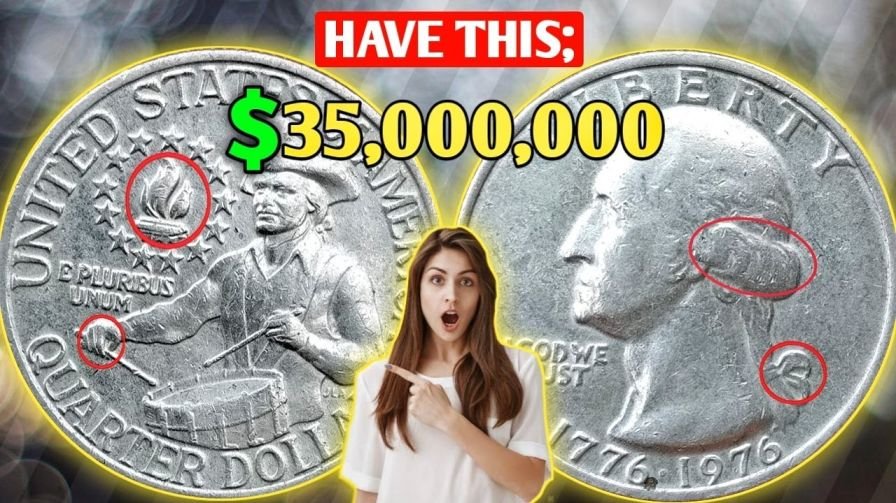
5 Rare Bicentennial Quarters : Bicentennial Quarters, minted in 1976 to celebrate America’s 200th birthday, are among the most iconic U.S. coins. With their special “1776–1976” dual date and the colonial drummer design on the reverse, they hold a special place in history. While millions were made, a few rare versions are worth far more than face value—sometimes even thousands of dollars.
In this guide, you’ll discover five rare Bicentennial Quarters that can skyrocket your collection’s value, how to identify them, and why they’re so special.
What Makes Bicentennial Quarters Special?
Unlike regular quarters, Bicentennial Quarters:
- Feature the unique colonial drummer design
- Were struck for only two years (1975–1976)
- Come in multiple versions, including silver proofs and error coins
Most are common pocket change, but rare mint errors, silver planchets, and proof editions make certain coins highly collectible.
5 Rare Bicentennial Quarters to Look For
1. 1976-S Silver Proof Bicentennial Quarter
- What It Is: Made of 40% silver and struck in San Francisco for collectors
- Why It’s Valuable: Limited mintage and silver content
- Value Range: $10–$50+ in top condition
- How to Spot It: Look for the shiny proof finish and the “S” mint mark under “IN GOD WE TRUST”
2. 1976-D Double Die Obverse Quarter
- What It Is: A rare error caused by the design being stamped twice
- Why It’s Valuable: Doubling makes it unique
- Value Range: $100–$500+
- How to Spot It: Check “LIBERTY” and “IN GOD WE TRUST” for doubled or blurry letters
3. 1976 No Mint Mark Quarter
- What It Is: Struck in Philadelphia with no mint mark—an error
- Why It’s Valuable: Very few exist
- Value Range: $50–$200
- How to Spot It: Look for a 1976 coin without any mint mark on the obverse
4. 1976-S Clad Proof Bicentennial Quarter
- What It Is: A proof coin made of copper-nickel (not silver)
- Why It’s Valuable: Known for sharp details and mirror-like finish
- Value Range: $5–$20
- How to Spot It: “S” mint mark with a polished appearance
5. 1976-D Struck on 40% Silver Planchet
- What It Is: A Denver-minted error coin struck on a silver planchet meant for proof coins
- Why It’s Valuable: Extremely rare and made of silver
- Value Range: $1,000+ at auctions
- How to Spot It: Heavier weight (about 5.75g vs. 5.67g) and slightly different color tone
Quick Reference Table
| Quarter Type | Mint Mark | Material | Value Range | Key Features |
|---|---|---|---|---|
| 1976-S Silver Proof | S | 40% Silver | $10–$50+ | Shiny proof finish |
| 1976-D Double Die Obverse | D | Copper-Nickel | $100–$500+ | Doubled lettering |
| 1976 No Mint Mark | None | Copper-Nickel | $50–$200 | No mint mark |
| 1976-S Clad Proof | S | Copper-Nickel | $5–$20 | Polished proof look |
| 1976-D Struck on Silver Planchet | D | 40% Silver | $1,000+ | Heavier weight, silver tone |
Tips for Finding Rare Bicentennial Quarters
- Check your change—rare coins sometimes appear in circulation
- Visit coin shops—dealers may carry proof and silver versions
- Look online—auctions on eBay or Heritage Auctions often list rare types
- Use a magnifier—it helps spot doubling, mint marks, and small errors
How to Care for Valuable Coins
- Store in coin holders or albums
- Never clean coins—cleaning lowers their value
- Handle by edges to avoid fingerprints
- Consider professional grading (PCGS or NGC) for authentication
FAQs About Bicentennial Quarters
Q1. Are Bicentennial Quarters rare?
Most are common, but certain proof, silver, or error versions are rare and valuable.
Q2. How much is a regular 1976 quarter worth?
In circulated condition, most are worth only 25 cents.
Q3. What is the most valuable Bicentennial Quarter?
The 1976-D struck on a silver planchet can sell for over $1,000.
Q4. Where is the mint mark located?
Below “IN GOD WE TRUST” on the obverse (front) of the coin.
Q5. Should I clean my Bicentennial Quarters?
No. Cleaning damages the surface and reduces value.
Final Thoughts
Bicentennial Quarters are more than just spare change—they’re historical keepsakes with investment potential. While most are worth face value, the rare types listed above can bring serious money to collectors.
If you love history, treasure hunts, or simply want to explore coin collecting, start checking your change and local coin shops. You might uncover a hidden gem worth hundreds—or even thousands—of dollars!