
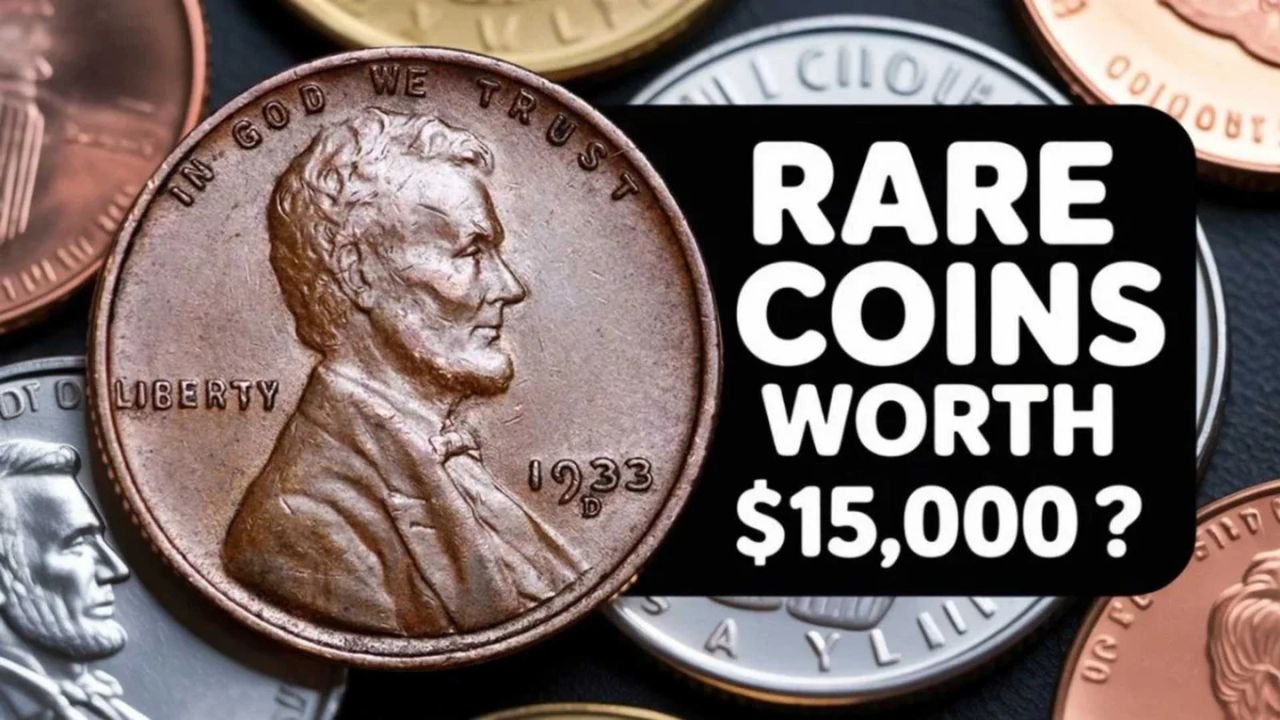
Imagine stumbling upon an old coin in a drawer and discovering it’s worth more than your monthly rent. While most coins from the 1970s are common, a select few carry hidden value that can reach thousands of dollars. Thanks to minting errors, low production numbers, and unique design variations, these coins are highly prized by collectors. Here’s what to know and what to look for.
Why Some 1970s Coins Are Valuable
Coin collectors focus on three main factors: rarity, condition, and demand. Some 1970s coins were struck in smaller quantities, while others have striking errors like doubled dies or missing mintmarks. Even a subtle variation can transform a regular coin into a collector’s gem.
7 Rare 1970s Coins Worth Checking
1. 1970-S Small Date Lincoln Cent
- Key Feature: Smaller, less common date style.
- Value Range: $50 – $3,000+
Collectors prize the subtle difference between the “Small Date” and the more common “Large Date.”
2. 1971 Eisenhower Dollar (Doubled Die Obverse)
- Key Feature: Noticeable doubling on “LIBERTY” and the date.
- Value Range: $100 – $1,500
This dramatic error makes the coin a must-have for Eisenhower dollar enthusiasts.
3. 1972 Lincoln Cent (Doubled Die Obverse)
- Key Feature: Strong doubling on “IN GOD WE TRUST” and “LIBERTY.”
- Value Range: $300 – $3,000
One of the most famous Lincoln cent errors from the 1970s, it’s highly sought after.
4. 1975 No-S Roosevelt Dime
- Key Feature: Missing “S” mintmark on proof coins.
- Value Range: Up to $350,000
Extremely rare, with fewer than two known examples. One of the most valuable 1970s coins.
5. 1976 Bicentennial Quarter (Doubled Die Reverse)
- Key Feature: Doubling on “UNITED STATES OF AMERICA.”
- Value Range: $100 – $1,000
Patriotic quarters with this error are highly collectible.
6. 1979-S Type 2 Proof Coin
- Key Feature: Clearer “S” mintmark compared to Type 1.
- Value Range: $50 – $500
Popular among proof coin collectors for its sharp mintmark detail.
7. 1970-D Kennedy Half Dollar (Small Date Over Large Date)
- Key Feature: Repunched “Small Date” over “Large Date.”
- Value Range: $100 – $1,200
This subtle overdate variety attracts serious half-dollar collectors.
Quick Value Guide
| Coin | Key Feature | Value Range |
|---|---|---|
| 1970-S Lincoln Cent | Small Date | $50 – $3,000+ |
| 1971 Eisenhower Dollar | Doubled Die Obverse | $100 – $1,500 |
| 1972 Lincoln Cent | Doubled Die Obverse | $300 – $3,000 |
| 1975 No-S Roosevelt Dime | Missing Mintmark | Up to $350,000 |
| 1976 Bicentennial Quarter | Doubled Die Reverse | $100 – $1,000 |
| 1979-S Proof Type 2 | Clear “S” Mintmark | $50 – $500 |
| 1970-D Kennedy Half Dollar | Small Date over Large Date | $100 – $1,200 |
Expert Tips to Spot Rare Coins
- Use a magnifying glass to check for doubled dies and mintmark details.
- Condition matters — coins in mint state are far more valuable.
- Compare with reference guides to confirm rarity.
FAQs
Q: Can I find rare 1970s coins in circulation?
A: It’s rare, but searching coin rolls or inherited collections increases your chances.
Q: Are all Bicentennial coins valuable?
A: Only error or high-grade proof varieties have premium value.
Q: How should I sell a rare coin?
A: Get professional grading from PCGS or NGC, then sell through auctions or trusted dealers.
Q: What is a doubled die?
A: A doubling of letters or numbers during minting, making the coin a collectible error.
Q: How do I know if a coin is a proof?
A: Proof coins have a mirror-like finish and sharper details compared to regular circulation coins.
Conclusion
The 1970s may feel recent, but coins from this decade are now prized collectibles. From the ultra-rare 1975 No-S Roosevelt Dime to the sought-after 1970-S Small Date Lincoln Cent, even a single coin could be worth thousands. Check your old change — one coin might just be your next big treasure.