
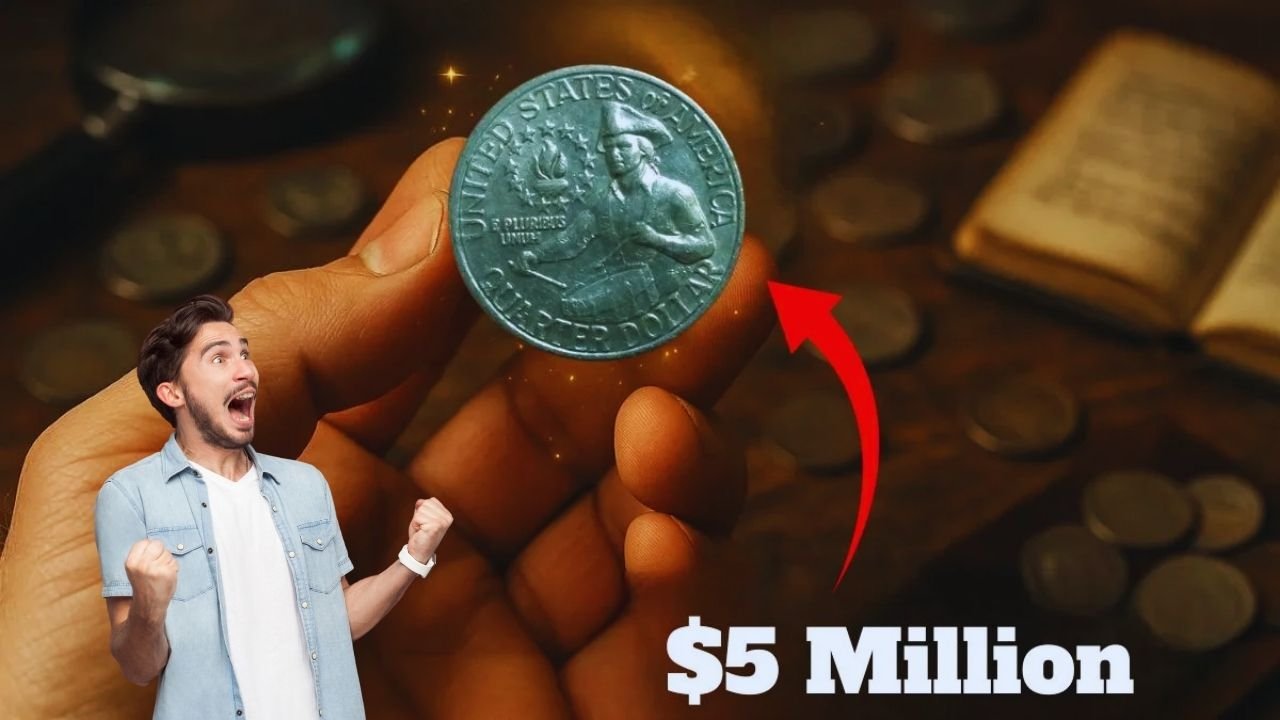
In 1976, America celebrated its 200th anniversary of independence, a milestone known as the Bicentennial. To honor this event, the U.S. Mint released special commemorative coins—including the Bicentennial Quarter, featuring the iconic “drummer boy” design. Nearly 50 years later, some of these quarters have become rare collectibles, with certain examples valued at up to $5 million.
But what makes these coins so valuable? Let’s explore their history, features, and what to look for if you think you may have one.
History of the Bicentennial Quarter
The Bicentennial Quarter was minted in 1975 and 1976 to mark America’s 200th birthday. Unlike regular quarters, which feature the eagle reverse, this coin proudly displayed:
- Design: A Revolutionary War drummer boy, created by artist Jack L. Ahr
- Dual Dates: 1776–1976, symbolizing two centuries of American freedom
- Mint Locations:
- Philadelphia (no mint mark)
- Denver (D)
- San Francisco (S) – often in proof or 40% silver editions
Key Features That Boost Value
Mint Errors
Rare minting mistakes make some Bicentennial quarters worth thousands to millions:
- Double strikes – design printed twice
- Off-center strikes – misaligned images
- Wrong planchet – struck on a coin blank meant for another denomination (e.g., a dime)
40% Silver Editions
Most quarters are copper-nickel clad, but San Francisco produced limited 40% silver proof and uncirculated versions, now highly prized by collectors.
Proof Coins
Proof coins have a mirror-like surface and were not intended for circulation. These shiny coins, especially in perfect condition, attract premium prices.
Condition & Grading
A coin’s grade can drastically affect value:
- Circulated coins – worth face value or slightly more
- Mint State (MS67 or higher) – can sell for thousands
- Professionally graded coins (PCGS or NGC) – command trust and higher bids
Examples of Rare & Valuable Bicentennial Quarters
| Coin Type | Key Feature | Estimated Value |
|---|---|---|
| 1976-S Silver Proof Quarter | Mint set only, matte finish | $1,000–$3,000+ |
| Double-Strike Error Quarter | Design struck twice or misaligned | $1,000–$10,000+ |
| Clad Coin in Silver Proof Set | Copper-nickel included in silver set | Up to $8,500 |
| High-Grade MS67+ Quarter | Exceptional condition | $5,000–$20,000+ |
| Ultra-Rare Error or Unique Specimen | Extremely limited | Up to $5 million |
How to Spot a Rare Bicentennial Quarter
- Check the Mint Mark: No mark = Philadelphia, D = Denver, S = San Francisco (proof/silver)
- Look for Errors: Double strikes, off-center images, or unusual details
- Test the Metal: Silver quarters weigh slightly more and appear brighter
- Examine Condition: The fewer scratches, the better
- Get Professional Grading: Have your coin certified by PCGS or NGC
What to Do if You Find One
- Don’t Clean It – Cleaning reduces value
- Handle Carefully – Use gloves, touch only the edges
- Seek Expert Appraisal – Visit a trusted coin dealer or auction house
- Sell Smart – Consider reputable auction platforms like Heritage Auctions
FAQs
Q1: Are all Bicentennial Quarters valuable?
No, most are worth only 25 cents unless they have errors, silver composition, or exceptional condition.
Q2: How much is a silver Bicentennial Quarter worth?
Depending on grade, anywhere from $5 to several thousand dollars.
Q3: How do I know if my Bicentennial Quarter is silver?
Silver versions weigh 5.75 grams (vs. 5.67 grams for clad) and have a distinct grayish shine.
Q4: Can I find a $5 million Bicentennial Quarter in circulation today?
It’s extremely unlikely, but rare specimens sometimes resurface from private collections.
Q5: Where should I sell my rare coin?
Reputable coin dealers, grading services, or auction houses are the best options.
Conclusion
The Bicentennial Quarter is more than just a 25-cent coin—it’s a piece of American history. While most are common, certain rare errors, silver editions, and high-grade specimens can fetch thousands—or even millions—of dollars.
So, before spending that old 1976 quarter, take a closer look. You could be holding a small piece of history worth a fortune.