
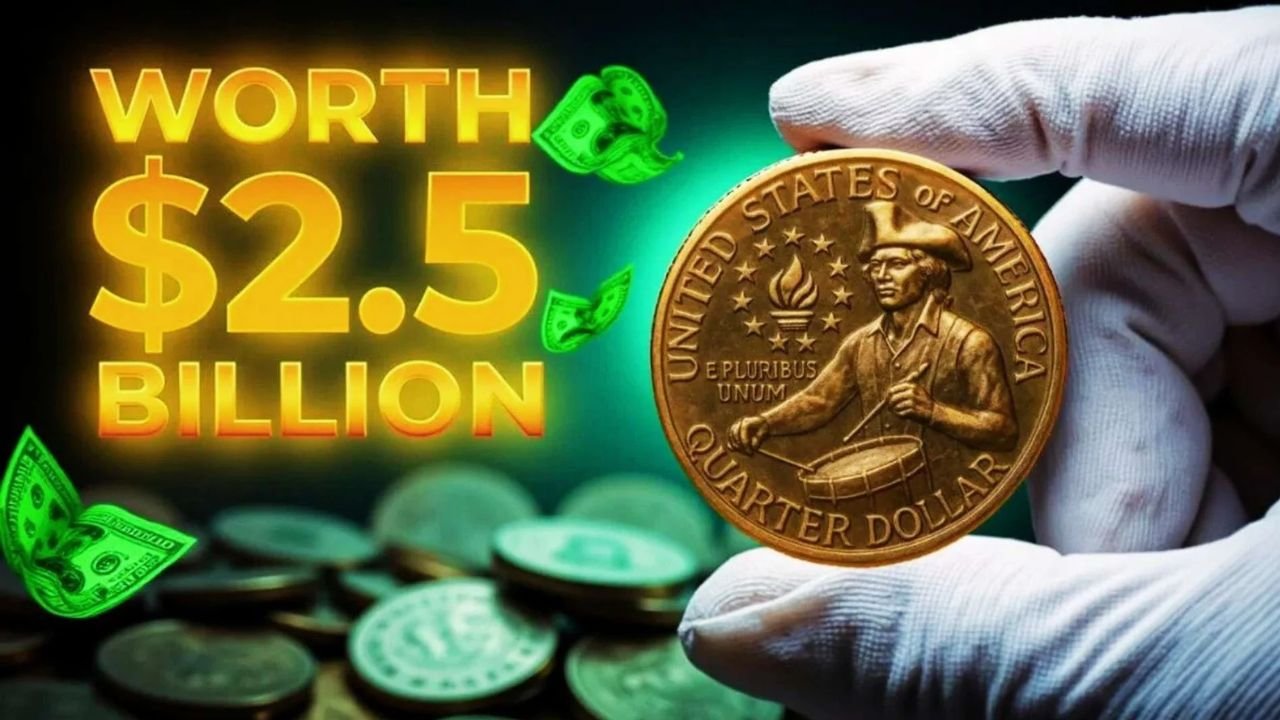
Imagine pulling a 1976 Bicentennial Quarter from your pocket and discovering it’s worth not 25 cents… but potentially billions. Sounds unbelievable, right? Yet coin collectors have long whispered about a legendary quarter whose value could reach a jaw-dropping $2.5 billion. Let’s explore the story behind this rare coin, how to spot it, and why it’s so coveted.
The History of the Bicentennial Quarter
In 1975–1976, the United States celebrated its 200th anniversary with special coins. The Bicentennial Quarter replaced the traditional eagle design with a colonial drummer boy and a torch surrounded by 13 stars. Over 1.6 billion quarters were minted, but a few rare versions have become extremely valuable to collectors.
Why Some Bicentennial Quarters Are So Valuable
Most 1976 quarters are worth just their face value. However, a few stand out due to:
- Minting errors like double dies or off-center strikes
- Wrong planchet errors, where the coin is struck on incorrect metal
- Proof or silver issues, with sharper detail and higher quality
- Unique, one-of-a-kind specimens, rumored to reach valuations of $2.5 billion
Key Traits of Rare Bicentennial Quarters
Not every drummer boy quarter is a treasure. Look for these unique features:
- Double die errors on the date or lettering
- Off-center strikes, where part of the design is missing
- Wrong metal planchets, producing unusual color or weight
- Silver proof coins, often sold in collector sets
| Feature | Regular Bicentennial Quarter | Rare / Error Quarter |
|---|---|---|
| Composition | Copper-nickel clad | Some silver (40%) or wrong metal |
| Value | $0.25 | $1,000 – $2.5 billion |
| Design | Drummer boy reverse, 1776–1976 | Same design, but errors/rare strikes |
| Availability | Extremely common | Extremely rare, often unique |
Tips for Identifying a Valuable Quarter
- Examine lettering closely – look for doubling on “Liberty” or “In God We Trust.”
- Check the edges – silver quarters have solid edges; clad coins reveal copper.
- Inspect the strike – misaligned or missing elements can indicate rare errors.
- Use magnification – small details often hold the key to identifying valuable coins.
Quick Value Guide
| Type | Estimated Value |
|---|---|
| Regular circulation coin | $0.25 |
| 40% silver uncirculated set coin | $3 – $7 |
| Double die error | $500 – $5,000 |
| Off-center strike error | $1,000 – $10,000 |
| Wrong planchet error | $5,000 – $50,000+ |
| Unique rumored billion-dollar specimen | $2.5 Billion |
FAQs About Bicentennial Quarters
Q: Are all 1976 quarters valuable?
A: No, most are worth face value. Only rare errors or silver issues hold significant value.
Q: How can I tell if my quarter is silver?
A: Check the coin’s edge—silver coins lack the copper stripe seen in regular clad coins.
Q: Can these quarters still be found in circulation?
A: Rarely, but some still surface in pocket change, coin rolls, or estate collections.
Q: What is a double die error?
A: It occurs when a coin is struck twice, creating doubled images or lettering, increasing its value.
Q: How do off-center strikes affect value?
A: The more misaligned the strike, the higher the potential collector value.
Could Your Pocket Change Make You a Collector Millionaire?
The Bicentennial Quarter is more than a 25-cent coin—it’s a piece of American history and, for some lucky collectors, a potential fortune. While most are common, rare errors and unique specimens, including the legendary $2.5 billion coin, remind us that treasure can hide in plain sight.
Next time you handle a 1976 drummer boy quarter, take a closer look—it might just be worth more than you think.