
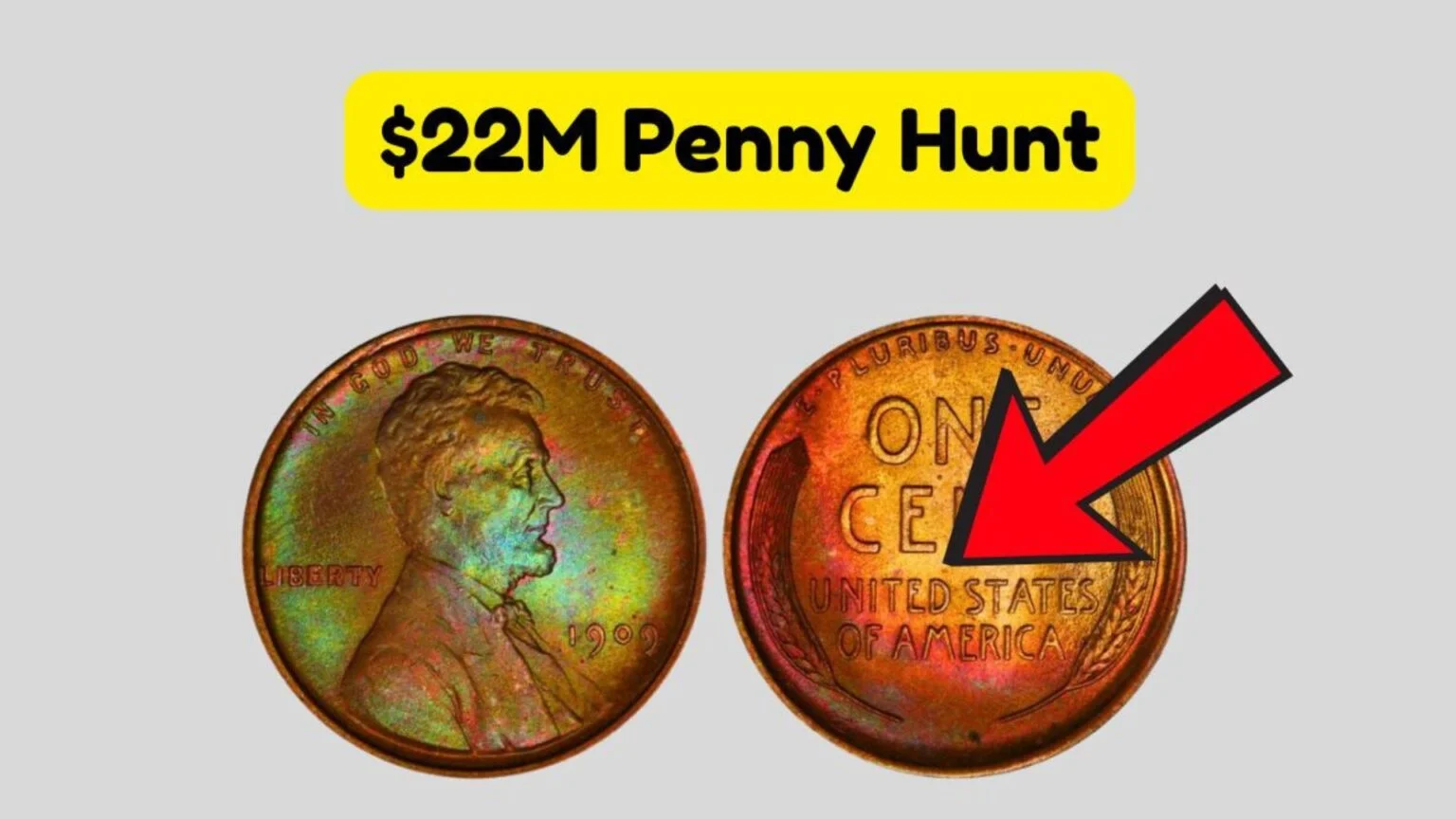
$22.2 Million Lincoln Wheat Penny : Imagine finding a simple penny in your pocket that could change your life forever. That’s exactly the case with the legendary Lincoln Wheat Penny worth $22.2 million. This rare coin has captured the imagination of collectors worldwide—and yes, there’s still a chance one could be hiding in your spare change.
In this article, we’ll explore the story behind the Lincoln Wheat Penny, why certain editions are so valuable, and how you can spot one.
The Story of the Lincoln Wheat Penny
The Lincoln Wheat Penny was first minted in 1909, honoring the 100th anniversary of Abraham Lincoln’s birth. Designed by Victor David Brenner, it became the first U.S. coin to feature a president’s portrait.
- Obverse (front): Lincoln’s profile
- Reverse (back): Two wheat stalks symbolizing prosperity
- Minted until: 1958
Over the years, rare minting errors and limited editions have made certain Lincoln Wheat Pennies incredibly valuable.
Why the $22.2 Million Penny Is So Special
During World War II (1943), the U.S. Mint switched from copper to zinc-coated steel to conserve copper for the war. However, a few pennies were mistakenly struck in copper that year.
- These rare 1943 copper pennies are among the most sought-after coins in U.S. history.
- One of them reportedly sold for an unbelievable $22.2 million at auction.
That combination of rarity, history, and error makes it a true treasure.
Key Factors That Drive Value
Not all Wheat Pennies are worth millions, but some can still fetch impressive sums. Here’s what affects their value:
- Rarity: Scarce years (like 1909-S VDB, 1914-D, 1922 No D).
- Errors: 1943 copper pennies, 1955 doubled-die errors.
- Condition: Uncirculated or mint-state coins are worth far more.
- Historical importance: Coins linked to Lincoln’s legacy and WWII.
Example Value Guide
| Year | Mint Mark | Condition | Estimated Value | Notable Feature |
|---|---|---|---|---|
| 1909-S VDB | S | Mint State | $1,000+ | First year with rare initials |
| 1943 | P | Circulated | $100,000+ | Rare copper error |
| 1955 | P | Uncirculated | $1,500+ | Doubled-die error |
| 1914-D | D | Good | $200+ | Low mintage |
| 1922 | None | Fine | $700+ | Missing mint mark |
How to Spot a Valuable Lincoln Wheat Penny
If you want to hunt for a fortune, here’s what to check:
- Date: Focus on coins minted between 1909–1958.
- Material: A 1943 copper penny (instead of steel) is the jackpot.
- Mint marks: Look under the date for “S” (San Francisco) or “D” (Denver).
- Condition: Shiny, uncirculated coins hold higher value.
- Errors: Doubled text, missing mint marks, or unusual details.
Quick Tips for Collectors
- Search your pocket change and old coin jars.
- Visit coin shops, shows, or auctions.
- Use coin grading guides or get professional grading.
- Store coins in protective holders to preserve condition.
- Join collector forums and groups to learn and trade.
FAQs About the Lincoln Wheat Penny
Q1: Why is the 1943 copper penny so valuable?
Because it was an accidental minting during a year when pennies were made of steel.
Q2: Can I still find Lincoln Wheat Pennies in circulation?
Yes, though rare, they sometimes appear in pocket change or old collections.
Q3: How do I know if my penny is authentic?
Have it graded by a professional coin authentication service.
Q4: What years should I look for?
Key years include 1909-S VDB, 1914-D, 1922 No D, 1943 copper, and 1955 doubled-die.
Q5: What’s the best way to store valuable coins?
Use airtight coin holders and keep them in a cool, dry place.
Conclusion: Start Your Treasure Hunt Today
The Lincoln Wheat Penny is more than a piece of money—it’s a piece of history with life-changing potential. From the ultra-rare 1943 copper penny to other valuable variations, these coins continue to surprise collectors and dreamers alike.
So next time you get change, take a closer look—you might just be holding a $22.2 million penny in your hand!